
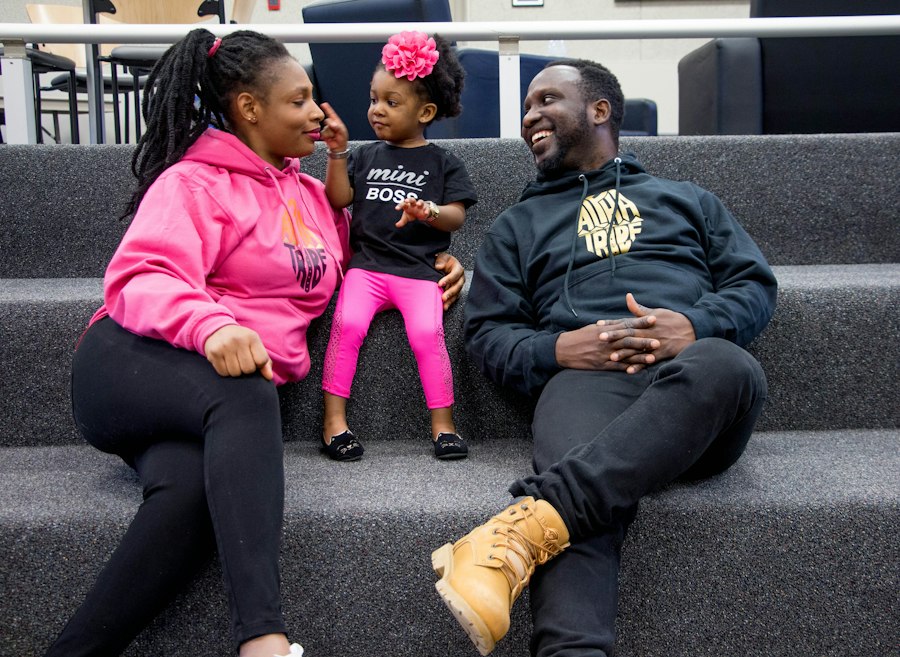
Faith can be one of the deepest resources available to a family. It can give people meaning during hardship, hope when circumstances are uncertain, moral direction when choices are difficult, community when families feel alone and practices that help people remember what they value. For Christian families, prayer, Scripture, worship, forgiveness, service, generosity and a shared understanding of God can become woven into marriage, parenting, caregiving and family identity.
These things matter.
But spiritual language can become harmful when it is used to replace responsibilities that relationships still require. A couple cannot pray instead of eventually having the conversation they have been avoiding. A parent cannot quote Scripture instead of learning what is developmentally appropriate for a child. Forgiveness cannot take the place of accountability after harm. A struggling family should not be told that seeking competent professional help demonstrates insufficient faith. And when abuse or serious danger is present, spiritual language should never be used to make safeguarding unnecessary.
TogetherWell therefore approaches faith with both conviction and responsibility.
Faith can strengthen family life. It should not be used to escape the relational work that healthy family life requires.
The Important Question Is Not Only Whether Faith Is Present, but How It Is Functioning
For many families, religion is not confined to worship services. Faith may shape understandings of marriage, parenting, sexuality, money, forgiveness, family responsibility, suffering, authority, ageing, death and what it means to live well.
Research on religion and family life reflects that complexity. Annette Mahoney’s major review of family research examined religion as something that can shape marital and parent-child relationships for better and for worse, depending on the specific beliefs, practices and relational mechanisms involved. The review argued that family research should move beyond asking simply how religious somebody is and instead examine the particular ways spirituality operates within relationships.
That gives TogetherWell a particularly useful question:
“How is faith functioning inside this family?”
Is it deepening compassion, humility, responsibility, hope and truthfulness? Is it strengthening family identity and supporting people under stress? Or is religious language being used to avoid difficult conversations, protect unhealthy power, spiritualise every problem or discourage people from seeking appropriate help?
Faith is not automatically beneficial merely because it is present.
How it is interpreted, practised and applied matters.
Keep Five Sources of Understanding Distinct
Faith-sensitive family work becomes clearer when several different sources of knowledge are allowed to contribute without being confused with one another.
Research evidence asks what systematic study suggests and how strong or limited that evidence is. Professional practice asks what responsible family-life education, relationship strategy, safeguarding and referral require. Cultural context asks what norms, responsibilities, meanings and expectations operate within a particular community. Biblical and theological perspective asks what Scripture and Christian tradition contribute to understanding family life. Personal or family interpretation concerns the way particular individuals and families understand and apply these ideas.
These sources can inform one another.
But they are not interchangeable.
A family practice does not become a biblical command merely because it is culturally familiar. A research finding does not automatically decide a theological question. A person’s interpretation of one biblical passage should not be presented as though all Christians necessarily agree with it. A professionally responsible safeguarding decision should not be dismissed simply because a family has traditionally handled the issue differently.
This distinction is especially important in highly religious settings where faith, culture and family tradition may be tightly intertwined.
Research Does Not Support a Simple “Religion Makes Families Healthier” Formula
The empirical literature is more nuanced than the claim that greater religiosity automatically produces healthier family relationships.
Mahoney and colleagues’ earlier meta-analytic review examined 94 studies on religion, marriage and parenting. Greater religiousness was associated with some more favourable marital outcomes, including lower divorce risk and somewhat better marital functioning, but the effects were generally small and the authors emphasised major limitations in how both religion and family functioning had been measured. The same review also found a modest association between greater Christian conservatism and greater endorsement or use of corporal punishment among parents of preadolescent children.
Mahoney’s later review reached an equally important conclusion: rather than treating religion as one broad variable, research needs to examine the specific spiritual beliefs, meanings and practices that may strengthen family bonds or intensify difficulties.
For TogetherWell, the implication is clear.
We should neither dismiss faith nor romanticise it.
Faith can be a resource.
Faith can also be misunderstood, misapplied or used in ways that worsen relational difficulty.
Faith Can Give Families Meaning and Support Coping
One of faith’s great strengths is its capacity to locate family life within a larger story. A bereaved family may draw hope from beliefs about God and eternity. A couple experiencing economic hardship may sustain one another through prayer and a conviction that hardship does not remove their dignity or purpose. Parents may understand raising children not merely as providing food and education but as stewardship, formation and responsibility before God.
Within the TogetherWell Family Wellness Architecture, this connects directly with Shared Identity, Meaning & Direction.
Yet shared religious identity should not be assumed simply because everyone in a household attends the same church or identifies as Christian. Spouses may interpret Scripture differently. Adolescents may be asking questions that parents have never had to ask. Extended relatives may attach different theological meanings to marriage, authority, money or obligation.
Religious coping research also suggests that people use faith in different ways during major stress. The foundational work of Pargament, Smith, Koenig and Perez distinguished positive and negative patterns of religious coping rather than assuming that all religious coping functions similarly. Their 1998 study identified patterns such as seeking spiritual support and benevolent religious reappraisal on one side, and spiritual discontent, punitive interpretations of God and interpersonal religious conflict on the other.
More recent reviews reinforce the need for nuance. Negative religious coping tends to show more consistent associations with poorer psychological adjustment, whereas findings for positive religious coping are often more favourable but are not uniform across all populations, outcomes or circumstances.
The useful lesson is therefore not that one form of spiritual response guarantees a particular outcome.
It is that:
Not every use of faith during stress functions in the same way.
Prayer and Responsible Action Belong Together
TogetherWell takes prayer seriously.
For Christian families, prayer may express dependence on God, create space for reflection, strengthen hope and help people seek wisdom and courage.
But prayer and responsibility should not be placed in competition.
A couple may pray about financial pressure and still need a budget. Parents may pray for wisdom and still need to learn about child development. A husband and wife may pray for their marriage and still need to apologise, communicate differently or change a recurring pattern. Someone experiencing significant psychological distress may pray while also seeking appropriate professional care. A family caring for an ageing parent may pray for strength while also redistributing responsibilities more fairly.
There will also be circumstances in which acceptance, waiting or surrender is appropriate because the stressor cannot immediately be changed. The point is therefore not that responsible faith must always produce more activity.
The better question is:
“What does wisdom require from us in this situation?”
Sometimes the answer is action.
Sometimes it is endurance.
Sometimes it is seeking help.
Sometimes it is accepting what cannot presently be changed while still responding responsibly to what can.
Prayer should support wise engagement with reality rather than become a reason to avoid reality.
Scripture Should Guide Families—But It Should Be Interpreted Responsibly
Christian families naturally look to Scripture for direction.
That is appropriate.
But quoting a verse is not identical to interpreting it responsibly.
Biblical texts have literary, historical and theological contexts, and Christian traditions sometimes differ in their understanding of particular passages. Responsible application therefore asks not merely, “What verse can I quote?”, but what the text means and how its principles should be applied faithfully in the present situation.
James 1:19, for example, commends quickness to hear, slowness to speak and slowness to anger. It has obvious relational relevance, but it was not written as a modern marriage-communication technique. Biblical commands to honour parents do not automatically establish that every preference of an adult parent should govern the household of a married adult child. Biblical teaching on forgiveness should not be converted into the claim that trust must return immediately after serious betrayal.
Faith-sensitive families therefore benefit from asking:
What does Scripture actually teach?
What does our culture expect?
What has our family traditionally assumed?
What is our own interpretation?
And what does responsible application require here?
Those questions may produce overlapping answers.
They should not be collapsed into one.
Forgiveness Does Not Remove Accountability
Forgiveness is central to Christian faith.
Families need mercy because people fail, disappoint and wound one another.
But forgiveness is sometimes asked to carry responsibilities it cannot replace.
A spouse is hurt deeply and hears:
“Just forgive.”
A relative repeatedly violates a boundary and is defended with:
“You are a Christian; let it go.”
Serious betrayal occurs and the injured person is pressured to act as though trust should already be restored.
From a Christian theological perspective, forgiveness can be part of healing, but forgiveness, accountability, trust and reconciliation are not identical processes. A person can forgive while still expecting behavioural change. A parent can forgive a child and still maintain an appropriate consequence. Someone can relinquish revenge while maintaining necessary distance. And in situations involving serious harm or danger, forgiveness should never become pressure for immediate reconciliation or restored access.
Forgiveness does not mean pretending that nothing happened.
Repair still requires truth, responsibility and appropriate change.
Faith Should Make Room for Emotional Reality
Some families struggle to make room for grief, fear, anger, sadness or disappointment because painful emotion is interpreted as spiritual failure.
A grieving person is told:
“Do not cry; have faith.”
A frightened person hears:
“God has not given us a spirit of fear.”
A parent under severe pressure is told:
“You need to pray more.”
From a biblical perspective, Scripture itself contains lament, grief, fear, sorrow and anguish. Jesus wept, and the Psalms repeatedly hold distress and trust together. These biblical examples should not be treated as psychological research, but they do challenge the assumption that mature Christian faith requires the absence of painful emotion.
Professional family practice similarly should not treat ordinary grief, fear or emotional distress as evidence of deficient spirituality.
Faith can help families process emotion.
It should not force them to pretend emotion is absent.
Spiritual Language Should Not Shut Down Relationship
Religious language can sometimes end conversations that need to remain open.
A wife says:
“I feel alone in this marriage.”
and her husband replies:
“You need to trust God.”
A teenager says:
“I am struggling to understand what we believe.”
and the parent answers:
“Do not question spiritual things.”
A spouse raises concerns about decision-making and the response is:
“God gave me authority.”
In each case, a spiritual idea may be used to prevent further examination.
This becomes particularly serious when one person’s preference is presented as God’s unquestionable command. Ordinary relational disagreement can then become morally loaded: disagreeing with the person begins to feel like disagreeing with God.
That magnifies power.
Whenever spiritual authority is claimed, accountability should increase rather than disappear.
Whatever Christian families believe about marital roles, parental authority or spiritual leadership, no theological interpretation should legitimise coercion, humiliation, sexual violation, violence or the silencing of legitimate concerns. Any theology of authority should be examined not only for what it says about leadership, but also for how it treats vulnerability, consent, responsibility and the possibility of respectful challenge.
Spiritual authority is not less accountable because it is spiritual.
Faith Can Strengthen Marriage Without Hiding Marital Problems
Shared faith can provide couples with values, prayer, community, rituals, moral commitments and a larger sense of purpose. Research suggests that particular religious and spiritual processes may sometimes support romantic relationships, but the evidence does not justify treating church attendance or religious identification as proof that a marriage is healthy.
The practical question is whether faith strengthens the way two people live together.
Does it increase honesty, humility, responsibility and faithfulness? Does it make repair more likely? Does it deepen concern for the spouse’s wellbeing? Does it create community that supports rather than controls the marriage?
A couple can pray together and still communicate badly.
They can attend church faithfully and still avoid conversations about money.
They can quote Scripture and maintain unfair patterns of power.
Religious participation may support marriage.
It should not conceal what the marriage actually needs.
Faith Should Strengthen Parenting Without Replacing Child Development
Christian parents may understand parenting as stewardship and spiritual formation.
That can be a source of seriousness, commitment and purpose.
But children are also developing human beings. A three-year-old’s impulse control, an eight-year-old’s reasoning and a sixteen-year-old’s growing autonomy are not the same. Behaviour may be shaped by temperament, disability, neurodevelopment, learning differences, health, stress, peers or emotional difficulties.
Not every behavioural concern is rebellion.
Not every developmental difference is disobedience.
And mental-health symptoms should not automatically be interpreted as spiritual attack, deficient prayer or moral failure.
Parents can teach faith while learning about child development. They can pray for children while seeking appropriate developmental or mental-health assessment where needed. They can maintain authority without interpreting every question as disrespect.
Faith-sensitive parenting should help adults understand the whole child rather than reducing every difficulty to a spiritual category.
Faith Communities Can Be Powerful Resources—When They Know Their Scope
Churches and faith communities can provide friendship, mentoring, practical assistance, benevolence, pastoral care, marriage education, parenting support, service opportunities and belonging.
These resources can be especially important where formal services are difficult to access or expensive.
But community support does not remove the importance of competence and professional boundaries.
A pastor can provide pastoral care without becoming a psychiatrist.
A marriage mentor can encourage a couple without becoming a domestic-violence investigator.
A prayer group can support someone receiving medical treatment without replacing medical care.
A parenting ministry can teach sound principles without diagnosing a child’s developmental condition.
Faith communities become safer and more effective when they know both what they can responsibly offer and when referral is necessary.
Seeking Professional Help Is Not Evidence of Weak Faith
Some family difficulties require expertise beyond what prayer, friendship, coaching or pastoral support can provide.
A child may need developmental assessment. A parent may need mental-health treatment. A couple may need specialised clinical support. Someone may need medical care. A person experiencing abuse may require safeguarding, legal advice or specialist services.
Families sometimes delay such help because they fear that doing so communicates lack of faith.
That conclusion is unnecessary.
Faith and professional support do not have to compete.
Seeking competent professional help need not conflict with prayer, pastoral support or spiritual dependence.
The relevant questions are whether the help is appropriate, competent, ethical and responsive to the family’s legitimate values and needs.
Faith Should Never Be Used to Keep Someone Unsafe
This boundary is non-negotiable.
Violence, coercive control, sexual abuse, child abuse, serious intimidation and credible threats should not be reframed primarily as a prayer problem, submission problem, forgiveness problem, faith problem or ordinary communication problem.
A person experiencing abuse should not be told:
“Pray harder and be more submissive.”
A child reporting sexual harm should not be pressured to remain silent in order to protect the family’s reputation.
A spouse who fears retaliation should not be pushed into an ordinary joint communication exercise simply to preserve appearances.
TogetherWell’s principle remains:
Safety concerns cannot be averaged away by strengths elsewhere in the family.
Safeguarding is not faithlessness.
Protecting vulnerable people is a moral responsibility.
Christian Moral Language Can Deepen Repair
Within Christian moral language, concepts such as confession, repentance, restitution, forgiveness and reconciliation can offer a rich framework for repair.
But these terms should retain their substance.
Confession involves truthful acknowledgement.
Repentance means more than verbal regret; it points towards turning from harmful behaviour.
Restitution may require practical action.
Forgiveness does not automatically restore trust.
Reconciliation cannot always be produced by one person’s willingness alone.
In ordinary relational conflict, these concepts can support accountability and repair. In serious situations, claims of repentance should not become shortcuts back to the previous level of access when sustained behavioural change has not yet occurred.
Christian language becomes most helpful when it deepens truth and responsibility rather than bypassing them.
Faith Can Help Families Carry Suffering Without Romanticising It
Some family pressures cannot be quickly solved.
Infertility.
Chronic illness.
Disability.
Bereavement.
Economic uncertainty.
Long-term caregiving.
Migration.
A child’s enduring support needs.
Faith may help families find hope and meaning when circumstances remain difficult.
But suffering should not be romanticised.
A family does not become more spiritual merely because it struggles for longer.
Endurance is not a reason to leave preventable problems unaddressed.
Hope is not denial.
Trust in God is not pretending loss does not hurt.
Mature faith can say:
“This is difficult.”
and still say:
“This difficulty does not have to define everything about us.”
That combination of honesty and hope can become a genuine family resource.
Faith Should Influence How Power Is Used
One of the most important questions for faith-sensitive family practice is:
“What does our theology teach us to do with power?”
Does leadership become service or domination?
Does authority increase responsibility or merely increase privilege?
Can a spouse raise concerns without being labelled rebellious?
Can a child report harm without being accused of dishonouring adults?
Can someone question a religious interpretation without being threatened spiritually?
Any theology of family authority should be examined not only by what it says about leadership, but by what happens to people who are more vulnerable within the relationship.
How does it treat consent?
How does it protect dignity?
Can authority be challenged responsibly?
What accountability exists when authority is misused?
Whatever theological position a family holds, TogetherWell maintains a clear professional boundary:
No interpretation of spiritual authority should make another person’s dignity, bodily autonomy or safety disposable.
Family Faith Should Leave Room for Questions
Children grow. Spouses change. People encounter new ideas, suffering, disappointment and experiences that may challenge what they previously assumed.
A healthy faith environment should not require family members to pretend they never have questions.
A child asking why the family believes something is not automatically rejecting faith. A spouse wrestling with a theological teaching may need conversation rather than correction alone. Someone disappointed after unanswered prayer may need companionship rather than a lecture about believing harder.
Families transmit faith not only through the beliefs they teach, but also through what happens when someone struggles with those beliefs.
If questions are always met with shame, people may learn to hide them.
If questions are taken seriously, families can model conviction without fear of honest exploration.
Faith Practices Matter Most When They Shape Family Practice
A family may pray together, read Scripture, attend church, fast, give, serve and worship.
These practices can be deeply meaningful.
But integration asks what happens afterwards.
Does prayer make apology easier?
Does Scripture challenge the misuse of power?
Does worship deepen gratitude?
Does teaching about forgiveness increase willingness to repair?
Does belief in human dignity affect how children are corrected?
Does generosity begin inside the household as well as outside it?
Does concern for truth change the way family members handle secrecy?
Does faith make people more responsible for the impact of their behaviour?
Spiritual practice and relational practice should not inhabit separate worlds.
The goal is integration.
Ask Two Questions Together
When a family challenge appears, two questions can be held side by side:
“What does our faith call us to?”
and:
“What responsible action does this situation require from us?”
If a couple is in conflict, faith may call them towards truth, humility, patience and forgiveness. Relational responsibility may require listening, apology, boundary-setting, problem-solving or changed behaviour.
If a child is struggling, faith may call parents towards love, stewardship and wisdom. Parenting responsibility may require developmental understanding, consistent guidance or professional assessment.
If an extended-family request arrives, faith may support generosity and honour. Responsibility may require considering household capacity, fairness and competing obligations.
If serious harm occurs, faith may call for truth, justice and protection rather than the preservation of appearances.
The two questions belong together.
The Relationship Strategy Process Still Applies
Faith does not remove the need to understand what is actually happening.
TogetherWell therefore still works through:
ASSESS → UNDERSTAND → IDENTIFY PATTERNS → DEFINE OUTCOME → DEVELOP STRATEGY → IMPLEMENT → REVIEW
Prayer may accompany every stage. Scripture and Christian values may shape the desired outcome. Faith communities may provide support.
But the family still needs to assess accurately, understand context, identify patterns, decide what needs to change, develop a practical strategy and review whether the strategy is helping.
Faith integration should strengthen this process. It should not short-circuit it.
The Central Idea
Faith can give families meaning, hope, moral direction, community and shared purpose.
But faith is healthiest in family life when it leads towards greater responsibility rather than away from it.
Prayer should not remove communication.
Forgiveness should not remove accountability.
Authority should not remove dignity.
Commitment should not remove safety.
Biblical conviction should not remove careful interpretation.
Pastoral support should not remove appropriate professional referral.
Hope should not remove honesty.
Faith should help families face reality with wisdom, love, courage and responsibility—not provide a spiritual vocabulary for avoiding reality.
That is the kind of faith-sensitive family life TogetherWell seeks to support.
Evidence & Framework Note
This article deliberately distinguishes research evidence, professional practice, cultural context, biblical/theological perspective and personal or family interpretation.
Research on religion and family life does not establish a simple causal rule that religion makes families healthier or less healthy. Much of the literature is observational, correlational or review-based. Mahoney’s 2010 review found that specific religious and spiritual beliefs and practices can intersect with marital and parent-child relationships in both constructive and problematic ways, while her earlier meta-analysis with colleagues identified small associations between greater religiousness and some marital outcomes alongside substantial measurement limitations. (Research source)
Religious-coping research similarly indicates heterogeneity. The foundational Pargament et al. study identified positive and negative patterns of religious coping across several samples facing major stressors. More recent systematic-review and meta-analytic work suggests that negative religious coping tends to show more consistent associations with poorer adjustment, while positive religious coping often shows favourable but less uniform associations depending on the population, stressor and outcome. (Research source)
Much of this evidence comes from populations outside Nigeria and should not be treated as proof that faith operates identically in Nigerian or wider African Christian families. Nigerian evidence exists in particular domains and populations, but family-specific evidence remains too limited and heterogeneous to justify sweeping local claims. TogetherWell therefore uses international findings cautiously and combines them with African contextualisation, Christian theological reflection, professional family-life practice and safeguarding principles.
Statements in this article concerning Scripture, prayer, forgiveness, repentance, authority, Christian marriage and spiritual responsibility are theological interpretations and TogetherWell professional applications, not empirical research findings.
Selected References
Mahoney, A. (2010). Religion in Families, 1999–2009: A Relational Spirituality Framework. Journal of Marriage and Family, 72(4), 805–827. The review examines religion in marital and parent-child relationships and emphasises the need to study specific spiritual mechanisms that may strengthen or intensify family processes. Source
Mahoney, A., Pargament, K. I., Tarakeshwar, N., & Swank, A. B. (2001). Religion in the home in the 1980s and 1990s: A meta-analytic review and conceptual analysis of links between religion, marriage, and parenting. Journal of Family Psychology, 15(4), 559–596. The review synthesised 94 studies and reported small associations between religion and several family outcomes while highlighting significant measurement limitations. Source
Pargament, K. I., Smith, B. W., Koenig, H. G., & Perez, L. (1998). Patterns of positive and negative religious coping with major life stressors. Journal for the Scientific Study of Religion, 37(4), 710–724. DOI: 10.2307/1388152. The study identified positive and negative religious-coping patterns across samples experiencing different major stressors. Source
Kowalczyk, O., Roszkowski, K., Montane, X., Pawliszak, W., Tylkowski, B., & Bajek, A. (2020/2022 review literature context). Contemporary systematic-review work on religiousness and coping during the COVID-19 period illustrates that findings for positive religious coping are heterogeneous while negative religious coping tends to show more consistent relationships with poorer adjustment. For the frozen web version, use the verified contemporary systematic review rather than presenting one pandemic sample as evidence for Nigerian family life.