
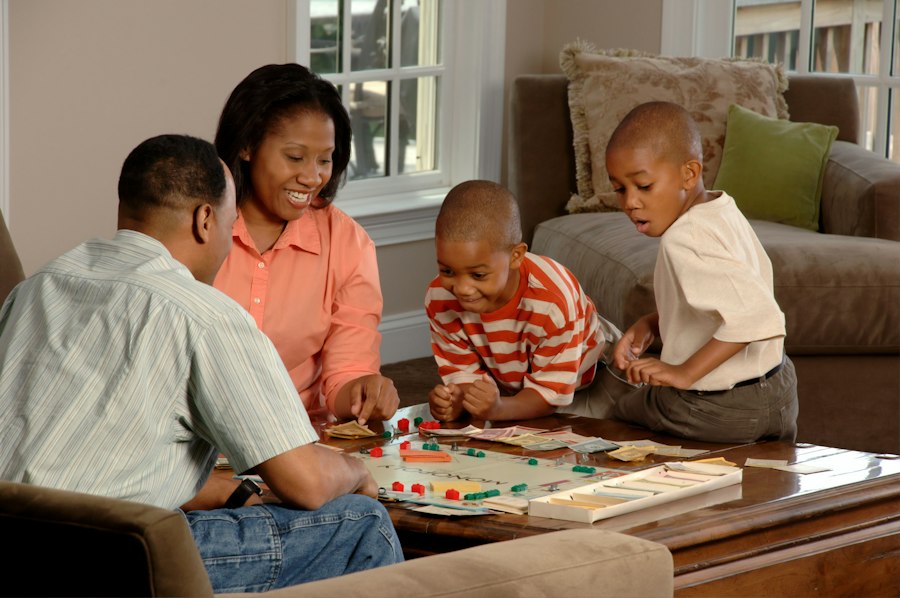
A family may become concerned because a child has started behaving differently at home. A couple may say their main problem is money. A parent may complain that a teenager no longer listens. Someone else may believe that interference from extended family is at the centre of repeated marital tension. Each of these concerns may be entirely real, and each deserves careful attention. Yet sometimes the problem that is easiest to see is only the most visible part of a wider pattern.
Consider a family that says, “Our son has become disrespectful.” If attention goes only to the child’s behaviour, the immediate response might be stricter discipline. A wider examination, however, may reveal several relevant pressures alongside the child’s own developmental, personal and contextual factors: the parents have recently come under severe financial strain, arguments between them have increased, one parent has become less emotionally available, expectations around the child’s behaviour are inconsistent and the teenager has begun withdrawing from family interaction. What first appeared to be one behaviour problem may therefore sit within several interacting realities.
This does not mean that every problem has a hidden family cause, that children’s behaviour should automatically be explained through their parents, or that individuals are never responsible for what they do. It means family life is interconnected enough that we should be cautious about treating every visible difficulty as though it exists in isolation.
Sometimes the more useful question is not simply:
“What is the problem?”
but:
“What else is happening around this problem, and what keeps repeating?”
Families Are Made of Interacting Relationships
A family is more than a collection of individuals sharing a surname, biological connection or household. Family members respond to one another, develop expectations about one another, organise responsibilities around one another and are affected by pressures moving through the relationships they share. A change in one part of family life can therefore influence another. Work stress may affect emotional availability; financial pressure may intensify couple tension; couple difficulties may affect parenting; parenting disagreements may increase strain between adults; a child’s difficult behaviour may increase parental stress, which can then influence subsequent responses to the child.
Family-systems thinking directs attention towards these interactions rather than assuming that every difficulty can be located neatly inside one individual. Research also provides evidence that different family relationship domains can be associated. Erel and Burman’s classic meta-analysis of 68 studies found a positive, moderate association between marital relationship quality and parent-child relationship quality, supporting a spillover interpretation while also finding that the size of the relationship varied across studies. PubMed
Yet systems thinking should not be reduced to a simple one-way causal chain. Influence within families can be bidirectional: children’s behaviour can affect parents, parenting stress can place pressure on couple relationships, and couple processes can influence parenting. What matters is interaction, not a search for one person to blame for everything.
The Presenting Problem and the Pattern Are Not Always the Same Thing
The presenting problem is the concern that first attracts attention. The pattern is the repeated sequence, context and interaction surrounding it.
The presenting problem may be:
“We argue about money.”
But the pattern may look more like this:
unexpected expense → anxiety → criticism → defensiveness → old grievances → withdrawal → unresolved decision → greater tension before the next money conversation.
The presenting problem may be:
“My child refuses instructions.”
Yet the sequence may be:
unclear expectation → repeated prompting → growing parental frustration → shouting → resistance → extreme consequence → resentment → the same struggle the following day.
Or the presenting problem may be:
“My spouse’s family interferes too much.”
while the wider sequence involves extended-family expectations, a commitment made without consultation, one spouse feeling excluded, the disagreement becoming a loyalty conflict and resentment increasing towards both the spouse and the wider family.
The original problem has not disappeared. Pattern thinking simply asks what happens around it.
Find the Pattern, Not Just the Person to Blame
Repeated family difficulty naturally produces blame. People begin thinking, “If he would change, everything would be fine,” “She is the problem,” “That child causes all the tension,” or “His mother is destroying our marriage.” Sometimes one person’s conduct genuinely does require direct accountability, especially where there is abuse, coercion, serious irresponsibility or another clear form of harm. Pattern thinking should never be used to blur responsibility that properly belongs to a particular person.
But in ordinary recurring family difficulties, blame can prevent everyone from seeing the sequence clearly. Instead of beginning with, “Who is the problem?”, a more productive question may be, “When this situation occurs, what tends to happen next?” That moves the discussion from global character judgements towards specific, observable interactions without removing personal responsibility.
Systems thinking is therefore not about distributing blame equally. It is about locating responsibility more accurately while also understanding the relationships and circumstances in which behaviour occurs.
Problems Can Spill Across Family Relationships
One process that helps explain interconnected family difficulties is often described as spillover—the possibility that emotions, behaviours or relational qualities in one family relationship may carry into another. The Erel and Burman meta-analysis found evidence favouring a positive spillover relationship between marital and parent-child relationship quality. A later meta-analysis examining interparental conflict and parenting likewise reported a moderate overall association, with harsh discipline and parental acceptance among the parenting behaviours most affected in the studies reviewed. PubMed
Spillover is useful because it reminds us that a person does not necessarily leave stress from one relationship at the door when entering another. At the same time, it is one explanatory model rather than a universal rule. Families can respond differently, other mechanisms may operate, and an association between two areas does not mean that one simple pathway explains every case.
The practical implication is to remain curious. When difficulty appears in one part of family life, it can be useful to ask whether anything elsewhere in the family may be increasing, reducing or reshaping that difficulty.
Economic Pressure Shows How One Problem Can Become Several
Money difficulties illustrate especially clearly why a family problem may refuse to remain in one category. A household may be dealing with reduced income, unstable employment, rising food costs, school expenses, housing pressure, transport costs or responsibilities towards relatives. The economic problem itself is real, but its effects may also reach emotional wellbeing, the couple relationship, parenting and household organisation.
The Family Stress Model provides one research framework for understanding these pathways. Reviews of the model describe economic hardship as contributing to day-to-day economic pressure, which may in turn be associated with parental psychological distress, difficulties within the interparental relationship and disrupted parenting processes. Much of this research has used longitudinal designs, although specific pathways and effect sizes vary across populations and circumstances. DOI
This matters because it prevents an overly simplistic response such as:
“This family just needs to communicate better.”
Sometimes the family genuinely needs increased income, debt support, employment opportunities, practical assistance or relief from a structural pressure. Relational skills may help family members navigate the difficulty together, but they do not make the economic difficulty imaginary.
A useful TogetherWell principle is therefore:
Relational skills can strengthen how a family responds to structural pressure, but they should not be used to deny the reality of the pressure itself.
Nigerian Families May Be Carrying Several Systems at Once
This interconnectedness is especially important when thinking about Nigerian family realities. A couple may be managing their own household while also carrying responsibilities towards parents, siblings or other relatives. Decisions may be shaped by religious communities, cultural expectations around marriage and gender, children’s schooling, uncertain employment, financial obligations across generations and the expectations placed on the relative perceived to have greater financial capacity.
Imagine that a husband’s younger sibling needs university fees. The request itself may be straightforward, but the family conversation surrounding it may raise several questions. Who decides how much the household gives? Should either spouse make a significant commitment before consulting the other? What happens if the couple is already struggling financially? Does refusing a request mean abandoning family responsibility, or might it sometimes represent a necessary limit? Does one spouse feel that the other’s family of origin repeatedly takes priority over their shared household?
What first appears to be a money issue may therefore also involve partnership, power, loyalty, boundaries, extended-family obligation, communication and shared priorities. The goal is not to reject interdependence or treat extended family as the enemy. It is to understand how different responsibilities interact and how decisions can be made with greater clarity, dignity and mutual responsibility.
Patterns Can Also Be Shaped Across Generations
Family patterns do not only move sideways between present relationships. People also bring histories into present family life. A parent may experience a child’s questioning as a serious threat to authority because questioning adults was not tolerated in the household where that parent grew up. A spouse may avoid difficult conversations because conflict in their family of origin was explosive. Another person may feel intense obligation to provide financially for extended relatives because this has been a defining expectation across generations.
Intergenerational influence is not destiny. People may repeat patterns they experienced, modify them, respond to them in completely different ways or deliberately reject them. Family history can help us understand a strong reaction without treating the past as an excuse for present harm.
A useful question becomes:
“What am I responding to in the present, and what might I also be carrying into the present?”
Events Matter, but So Does the Meaning We Give Them
Family members do not respond only to observable events. They also respond to what they believe those events mean. One spouse says, “You made that decision without me,” while the other hears, “You think I cannot be trusted.” A teenager asks, “Why do I have to do it now?” while the parent hears, “You do not respect my authority.” A wife asks her husband to address a boundary with his mother, and he hears, “You want me to abandon my family.” A husband asks to discuss expenses, and his wife hears, “You are trying to control me.”
Once these interpretations enter the interaction, the disagreement may become much larger than the original event. Pattern work therefore pays attention to both what happened and what people believed it meant.
Curiosity about interpretation, however, should never be used to minimise behaviour that is clearly harmful or unsafe. Sometimes an insulting statement is an insulting statement, a threat is a threat and coercive behaviour requires direct recognition rather than reinterpretation.
Stress, Emotion and Capacity Shape the Pattern
Family interactions also occur inside emotional and physical states. Someone may enter a conversation already carrying fear, exhaustion, loneliness, anger, shame or disappointment. Under prolonged pressure, people’s available emotional and practical capacity can narrow. They may become less patient, more reactive, more withdrawn, less able to listen or more likely to interpret an ambiguous action negatively.
When someone already feels chronically unappreciated, an ordinary request may sound like another criticism. When a parent feels powerless, a child’s resistance may feel like a direct threat to authority. When a couple is deeply worried about financial stability, an unexpected expense can carry emotional meaning far beyond its monetary value. The Family Stress Model is one research tradition illustrating how contextual pressures can connect with parental distress and then with relational and parenting processes. DOI
Stress does not excuse harmful behaviour. It helps us understand why a strategy that addresses only the final argument may fail if the pressures narrowing the family’s capacity remain untouched.
Sometimes the Child Becomes the Most Visible Part of a Wider Pattern
Children’s behaviour understandably attracts attention because it may be disruptive, worrying or urgent. Yet focusing exclusively on the child can sometimes obscure other relevant realities.
Suppose a child has become aggressive, withdrawn, resistant to instructions or increasingly troubled at school. Many explanations are possible. Development, temperament, peer relationships, learning difficulties, neurodevelopmental differences, health conditions, emotional difficulties or events outside the home may matter. We should never assume that family relationships are automatically the cause.
At the same time, responsible assessment may also ask what has changed around the child. Has adult conflict increased? Have routines broken down? Has there been a major transition? Are caregivers overwhelmed? Is parenting inconsistent? Is the child reacting to loss, relocation or economic pressure? Is there a safety concern?
Family Stress Model research provides one example of how contextual and family processes may become linked to child outcomes over time; it does not imply that this pathway explains every child’s behaviour. DOI
The purpose is not to blame parents. It is to resist treating the child as though the child exists outside relationships, development and environment.
Sometimes the Couple Problem Is Not Only a Couple Problem
A couple may describe their difficulty as poor communication when their communication is being strained by infertility, caregiving responsibilities, economic insecurity, exhausting work schedules, parenting demands, grief, health difficulties or conflict involving extended family. They may indeed benefit from stronger communication skills, but telling them simply to “communicate better” may feel inadequate if the pressures entering the relationship remain unnamed.
An important assessment question is therefore:
“What belongs to the relationship, and what pressure is entering the relationship from elsewhere?”
Sometimes the primary change target lies inside the couple’s interaction. At other times the relationship will remain under severe strain unless the family also addresses practical, environmental or specialist needs.
Sometimes the Extended Family Is Not the Whole Problem Either
When couples struggle over parents, siblings or in-laws, it is easy to define the outside relative as the entire problem. In some situations an extended-family member may indeed be intrusive, manipulative or harmful and appropriate boundaries may be necessary. In other situations, however, the central strategic difficulty is the couple’s own process for managing the outside relationship.
Do they have an agreed process for responding to significant requests? Can either spouse express concern without being accused of disrespecting the other’s family? Are financial commitments discussed before promises are made? Have they clarified the difference between generosity and unsustainable obligation? Do they understand what each person fears will happen if they say no?
The intervention may therefore involve strengthening the couple’s boundary, consultation and decision-making process rather than simply attempting to remove extended family from the picture.
Not Every Harmful Situation Is a Mutual Pattern
This distinction is non-negotiable. Violence, coercive control, sexual abuse, child abuse, intimidation, credible threats or serious exploitation should not be reframed as though two people are merely contributing equally to an interaction cycle.
Someone experiencing abuse should not be told:
“You need to understand what you are doing to trigger this pattern.”
That may shift responsibility away from the person choosing harmful behaviour and can increase danger.
TogetherWell’s principle remains:
Safety concerns cannot be averaged away by strengths elsewhere in the family.
The Family Pattern Map is designed for ordinary relational dynamics. Where safety is in question, safeguarding and appropriate specialist support take priority.
So How Do We Find the Pattern?
Begin with one repeated situation and slow it down. The TogetherWell Family Pattern Map uses one canonical six-stage sequence:
TRIGGER → RESPONSE → REACTION → ESCALATION → OUTCOME → AFTER-EFFECT
Imagine a couple who argue repeatedly when one partner returns home much later than expected without communicating. The late arrival is the trigger. The waiting spouse responds, “You clearly do not care about this family.” The returning spouse reacts defensively: “Nothing I do is ever enough for you.” The interaction escalates into arguments about work, money, household duties and previous disappointments. The outcome is withdrawal, with nothing agreed about future communication. Afterwards, one partner feels unimportant and the other feels unappreciated.
The visible issue was lateness, but the wider pattern includes expectation, interpretation, criticism, defensiveness, escalation, withdrawal and unfinished tension.
Now there is more useful information with which to work.
The After-Effect Can Shape the Next Trigger
A conflict does not necessarily end when people stop speaking. The aftermath may contain resentment, fear, shame, suspicion, emotional distance or reduced trust. Those experiences can influence how the next interaction begins.
An unresolved disagreement about money may increase anxiety around future spending. That anxiety may make the next purchase appear more threatening, prompting a sharper confrontation, which produces stronger defensiveness and another unresolved argument. In this way, the after-effect of one episode can become part of the context for the next trigger.
That is why the Family Pattern Map does not stop at the immediate outcome. It asks what remains afterwards.
Find One Meaningful Turning Point
Once the sequence becomes visible, the next question is not, “How do we change everything?” but, “Where could this pattern realistically be interrupted?”
Sometimes the most useful change occurs before the usual trigger. A couple might agree in advance on a financial amount above which both partners must consult before spending. Parents might create a predictable evening phone routine rather than renegotiating the expectation every day. Extended-family requests might follow an agreed household decision process before either person promises assistance.
At other times, the turning point is the first response: a concern can be raised without accusation. Sometimes it is during escalation: family members learn to recognise when the discussion has ceased to be productive and agree on a structured pause. Sometimes the point of change is repair: even though conflict occurred, an earlier apology, clarification or return to the original issue prevents the after-effect from hardening into the next cycle.
Choose one meaningful point of influence first. A small change does not guarantee transformation of the whole system, but it can produce new information and sometimes begin shifting what happens next.
Look for Strengths Inside the Pattern
Pattern mapping should not become an exercise in cataloguing failure. Families also have moments when the pattern does not escalate, and those moments can contain useful clues.
Perhaps difficult conversations go better when no one is rushing. Perhaps the child responds more cooperatively when expectations are discussed beforehand. Perhaps extended-family decisions are less contentious when the couple speaks privately before responding. Perhaps one partner already knows how to return after conflict and initiate repair. Perhaps faith practices, supportive relatives, humour, routines or practical planning already help the family recover.
These exceptions matter because they show that the pattern is rarely completely fixed. Existing strengths can become part of the strategy for change.
Context Changes Strategy
Two families can describe the same visible problem and need very different responses.
Two couples may both say they argue about money. In one household the central issue may be secrecy about spending. In another, the underlying pressure may simply be inadequate income. A third couple may be struggling with unclear expectations around extended-family support. In a fourth situation, one partner may be using control of money coercively against the other.
Those are not the same difficulty simply because the arguments occur around finances.
Likewise, two children who repeatedly refuse instructions may require very different understanding depending on age, developmental needs, temperament, family routines, communication, neurodevelopment, stress or safety. Similar symptoms do not guarantee similar patterns.
This is why assessment must come before strategy.
Advice Becomes More Useful After Understanding
Families receive enormous amounts of advice: communicate more, set boundaries, be stricter, forgive, be patient, spend more time together, stop shouting, pray more, plan better. Some of this may be wise. The problem is not advice itself. Advice becomes more useful when it follows adequate understanding.
TogetherWell therefore uses the Relationship Strategy Process:
ASSESS → UNDERSTAND → IDENTIFY PATTERNS → DEFINE OUTCOME → DEVELOP STRATEGY → IMPLEMENT → REVIEW
A strategy is more likely to address the actual difficulty when we have first examined what is happening, what pressures matter, what keeps repeating and what outcome the family is trying to create.
The Family Wellness Perspective Helps Us See the Whole Picture
A single repeated problem may touch several areas of the TogetherWell Family Wellness Architecture at once. A parenting struggle, for example, may involve Personal Capacities & Wellbeing if a caregiver is exhausted; Communication & Emotional Processes if instructions become arguments; Partnership, Power & Roles if parents disagree about discipline; Parenting, Caregiving & Development in relation to the child’s developmental needs; Family Organisation, Routines & Resources if the household lacks predictable structure; and Relational Security & Belonging if repeated conflict is weakening connection.
That is why TogetherWell holds:
The Family Wellness Perspective helps us see the family. The Relationship Strategy Process helps us respond.
The goal is not to make a simple problem unnecessarily complicated. It is to avoid solving the wrong problem because we looked too narrowly.
Ask Better Questions
Instead of asking only, “Who is the problem?”, ask what keeps happening. Instead of assuming that someone’s character explains everything, look at what precedes the behaviour, what follows it and what circumstances surround it. Instead of asking only how to stop the visible problem immediately, define what you would like to happen differently. And instead of distributing blame broadly, ask what responsibility genuinely belongs to each person, what can realistically be influenced and what external pressures may also require attention.
These questions do not weaken accountability. They make accountability more precise.
Start With One Repeating Situation
You do not need to analyse your entire family. Choose one recurring situation. Notice what happens before it. Identify the first response and what follows. Follow the sequence through escalation and outcome, and then pay attention to what remains after the episode appears to be over.
You may discover that the problem you thought you understood is part of a larger repeated interaction.
And when a pattern becomes clearer, the next step becomes easier to think about strategically.
Download the Family Pattern Map
The TogetherWell Family Pattern Map is a free four-page reflection tool built around:
TRIGGER → RESPONSE → REACTION → ESCALATION → OUTCOME → AFTER-EFFECT
It helps you examine the repeated sequence, the context surrounding it, the meanings and emotions involved, the strengths already available and one realistic point where change may begin.
Continue Your Family Wellness Journey
If the Family Pattern Map reveals that several areas of family life are connected, explore the wider TogetherWell approach.
If you are ready to move from identifying a pattern into a practical plan for change:
Evidence & Framework Note
This article draws on family-systems perspectives, spillover research and Family Stress Model scholarship to illustrate how relational and contextual processes can become interconnected within families. The research supports examining interactions among family subsystems and environmental pressures, but it does not establish that every family problem follows the same causal pathway.
Erel and Burman’s 1995 meta-analysis synthesised 68 studies and reported a moderate positive relationship between marital and parent-child relationship quality, supporting spillover at an aggregate level while also showing heterogeneity across studies. A later meta-analysis found an association between interparental conflict and parenting behaviours, while the Family Stress Model literature has examined pathways connecting economic hardship and pressure with parental distress, couple processes, parenting and child development. PubMed
The TogetherWell Family Pattern Map and its sequence—
TRIGGER → RESPONSE → REACTION → ESCALATION → OUTCOME → AFTER-EFFECT
—are TogetherWell-designed educational reflection structures. They are not presented as validated psychometric, diagnostic, forensic or causal assessment instruments.
Selected References
Erel, O., & Burman, B. (1995). Interrelatedness of marital relations and parent-child relations: A meta-analytic review. Psychological Bulletin, 118(1), 108–132. The review synthesised 68 studies and reported a moderate positive association consistent with spillover between marital and parent-child relationship quality. PubMed
Krishnakumar, A., & Buehler, C. (2000). Interparental conflict and parenting behaviors: A meta-analytic review. Family Relations, 49, 25–44. The review analysed 138 effect sizes from 39 studies and found an overall association between interparental conflict and parenting, including harsh discipline and parental acceptance. Wiley Online Library
Masarik, A. S., & Conger, R. D. (2017). Stress and child development: A review of the Family Stress Model. Current Opinion in Psychology, 13, 85–90. The review describes research examining pathways from economic hardship and pressure through parental distress, interparental relationship difficulties and parenting processes. DOI
Walsh, F. (2003). Family resilience: A framework for clinical practice. Family Process, 42(1), 1–18. Walsh’s framework highlights family belief systems, organisational patterns and communication/problem-solving as important processes in resilience and adaptation. Wiley Online Library